
The wave solder unloader is designed to receive PCBs from the wave soldering process with the aim of transferring the PCBs to the next process without any stoppages.
As the industry of electronics assembly presses forward in efforts to become more and more efficient, understanding the wave solder unloader and the value of this process may allow design engineers and production managers to make more informed decisions about their assembly lines.
The Necessity of a Wave Solder Unloader in PCB Assembly
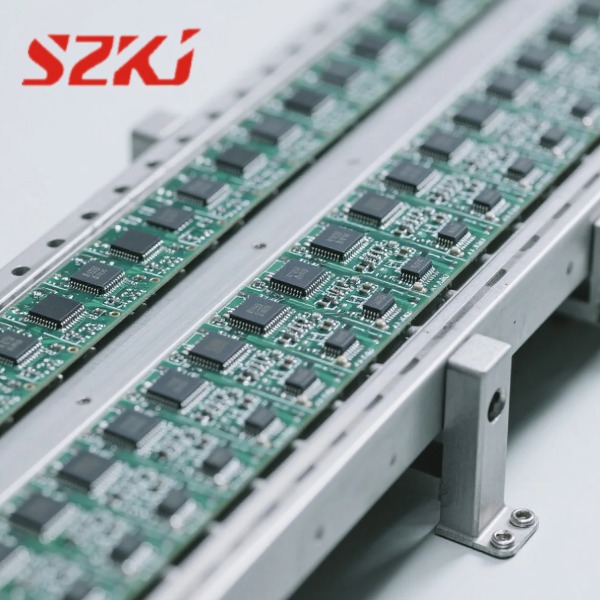
PCBs after wave soldering are hot and delicate and may be packed tightly together. It is possible to cause soldering defects, warping, and electrostatic discharge if the PCBs are handled manually at this stage. The wave solder unloader removes these hazards by enabling controlled and automated transfer of the boards.
In high-volume production, the wave solder unloader plays several critical roles:
- It maintains consistent spacing between PCBs after soldering
- It prevents congestion at the wave solder exit
- It reduces operator workload and manual contact
- It protects solder joints while they cool
Without a reliable wave solder unloader, even a well-tuned wave soldering process can suffer from reduced yield and unstable throughput.
How A Wave Solder Unloader Works In Practice
A wave solder unloader is typically installed directly at the exit of the wave soldering machine. As each PCB leaves the solder wave, it is transferred onto a conveyor system that carries it away at a controlled speed.
Most wave solder unloader systems rely on belt conveyors or rail-based mechanisms. These components are designed to support PCBs evenly and move them without sudden acceleration or vibration. The unloading process must stay synchronized with the wave soldering machine to avoid collisions or gaps in the production flow.
Key operating principles include:
- Continuous PCB queue unloading to avoid stop-and-go motion
- Adjustable conveyor width to match different board sizes
- Stable mechanical structure to prevent misalignment
The result is a smooth transition from soldering to cooling, inspection, or downstream assembly.
Example Of A Practical Wave Solder Unloader Configuration
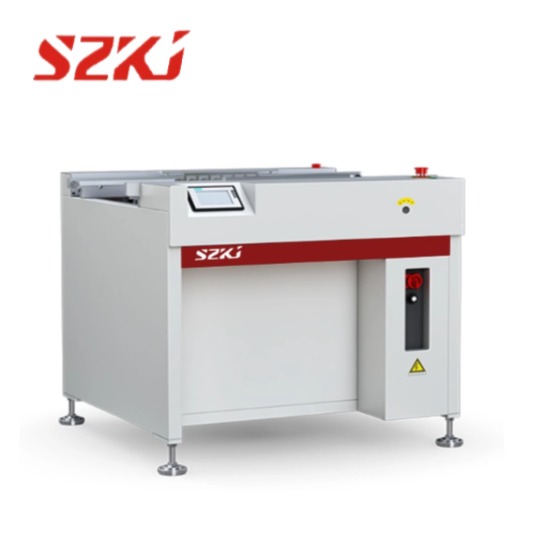
In real production environments, manufacturers often choose models that balance flexibility and durability. For example, SZKJ’s DIP-350-SZ wave soldering unloader is equipped with a guide rail belt unloader and a wave soldering exit conveyor for PCBs, and is designed for stable unloading directly after wave soldering.
This type of wave solder unloader is commonly used in DIP and mixed-technology assembly lines. Its design reflects typical industry requirements rather than experimental features. Notable characteristics include:
- PLC program control using Mitsubishi systems for stable operation
- Continuous queue unloading to keep PCBs moving steadily
- Hand-crank conveyor width adjustment for quick board size changes
- Adjustable PCB transfer angle to fit different line layouts
Because ESD flat belts are used for PCB transfer, the risk of electrostatic damage is reduced, which is especially important for sensitive components.
Wave Solder Unloader Versus Manual Unloading
Some small production lines still rely on manual unloading after wave soldering. While this may seem cost-effective at first, it introduces several hidden problems.
Compared with manual handling, a wave solder unloader offers:
- More consistent PCB spacing
- Lower risk of solder joint disturbance
- Reduced labor dependency
- Better support for continuous operation
Over time, the stability provided by a wave solder unloader often outweighs the initial investment, especially as production volumes increase.
Maintenance And Long-Term Operation Considerations
A wave solder unloader is usually exposed to heat, flux residues, and long operating hours. Simple, durable design makes maintenance easier and reduces downtime.
Practical maintenance benefits include:
- Easy access to belts and rails
- Minimal sensor complexity
- Stable mechanical alignment
When such considerations are taken into account during the selection process, the wave solder unloader then becomes a low-maintenance device rather than a line-interrupter.
Conclusion
Wave solder unloader machines might not be the most noticed machines in a PCB assembly line, but their function is imperative. With the growing need for automation in electronics manufacturing, the wave solder unloader machine continues to play an integral part in through-hole assembly.

-768x768.jpg)