In present-day SMT manufacturing, apart from having the necessary SMT production equipment, such as solder paste printers, pick-and-place machines, and reflow ovens, an effective and efficient SMT production line also requires a complex set of sophisticated SMT peripheral equipment devices. The SMT peripheral equipment devices assist in the entire PCB process from loading to inspection and cleaning. An efficient SMT peripheral equipment system configuration enables efficient enhancement of the level of automation and line balancing.
What Is SMT Peripheral Equipment?
- Definition: This is a definition of SMT peripheral equipment. It is additional machines that may be placed before, after, or in between other crucial wiring machines in SMT processes. These machines support placement and soldering processes.
- Function: These machines provide the capability for the automatic conveying, buffering, flipping, quality inspection, and reflow cleaning of the PCB boards.
- Purpose: The purpose of SMT peripheral equipment integration is to enable the optimization of efficiency through better stability of the production line.
Common SMT Peripheral Equipment in a Complete SMT Line
1. PCB Loader & Unloader
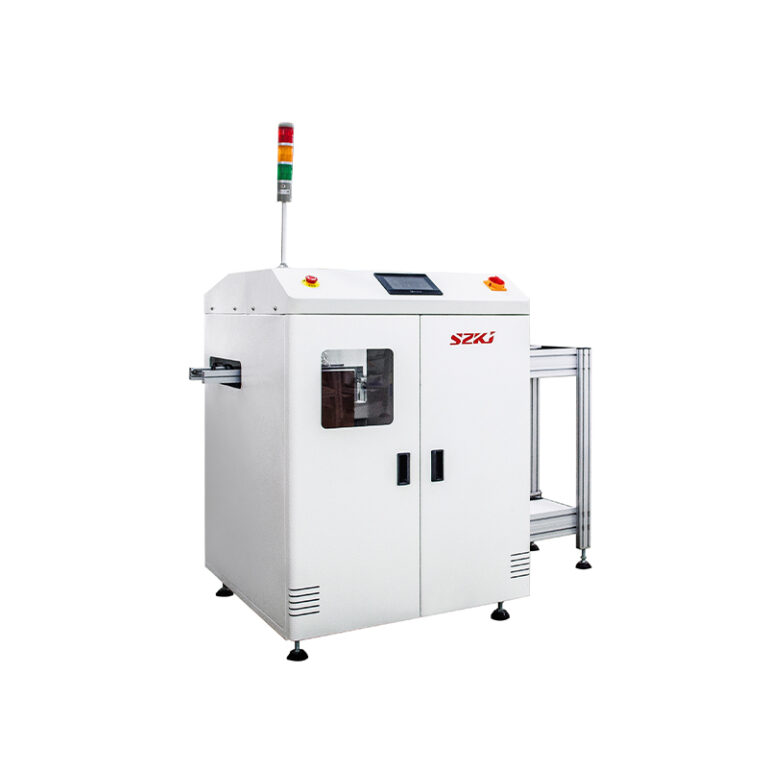
- Function: PCB loaders are used for transporting the raw PCBs and the processed PCBs to the SMT line. The unloaders help in collecting the PCBs after the completion of the SMT line.
- Advantage: They provide a significant reduction in manual handling, reduced labor costs, and prevent damage to the PCB as well as interruptions in production.
- Feature: Compatible with various PCB sizes and thicknesses, with adjustable settings to meet different SMT line configurations.
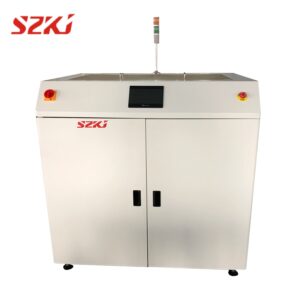
2. PCB Conveyor (SMT Conveyor)
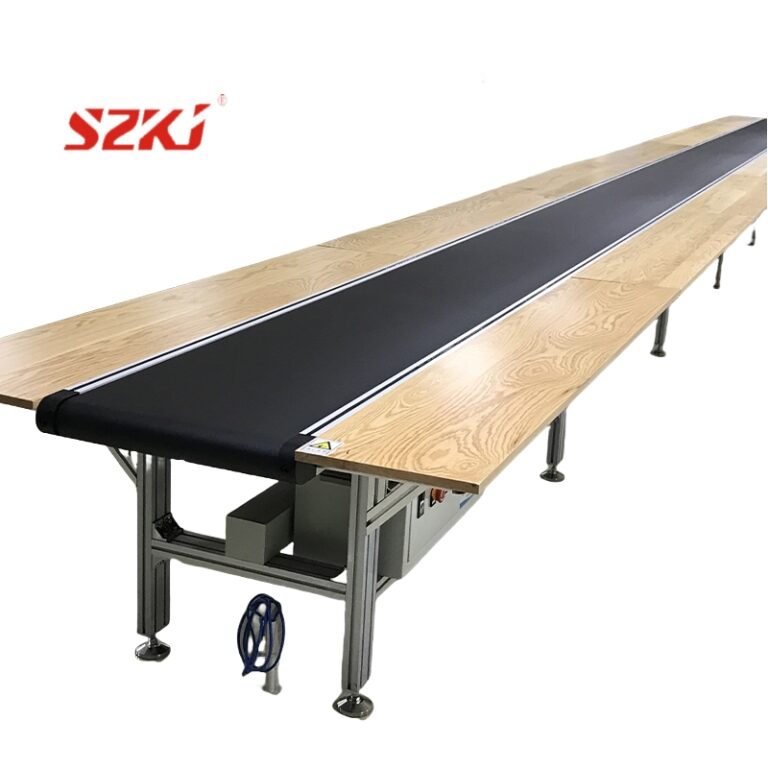
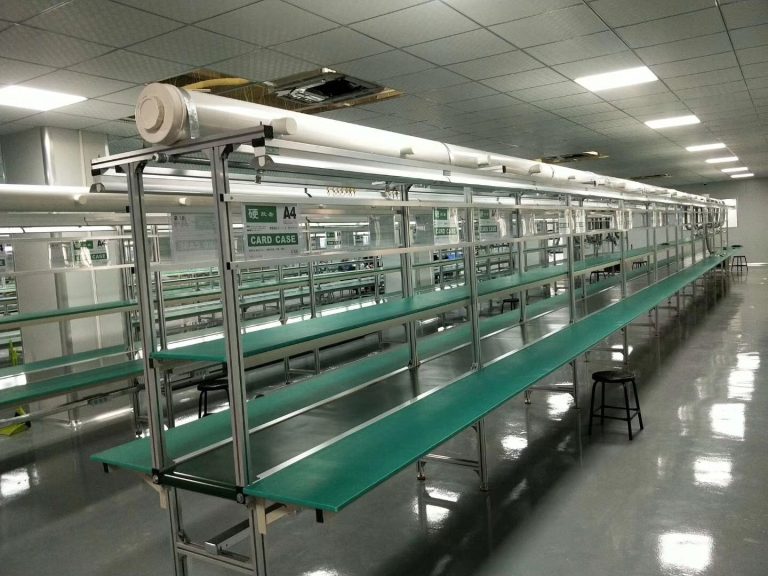
- Function: PCB conveyors connect different machines in the SMT line and provide stable, continuous PCB transportation between processes.
- Advantage: These help in maintaining the flow of production, preventing jams in the board, and help in maintaining Line Takt Time.
- Feature: Adjustable width design supports different PCB formats, with options for single-lane, dual-lane, or extendable conveyors.

3. PCB Buffer / Magazine Buffer
- Function: PCB buffers temporarily store boards between machines to compensate for speed differences among SMT processes.
- Advantage: It prevents line stops due to board accumulation or shortage. It optimizes line efficiency.
- Application: Commonly used in high-speed SMT lines, multi-mounter configurations, and complex production layouts.
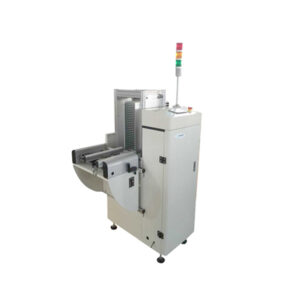
4. PCB Flipper / Inverter
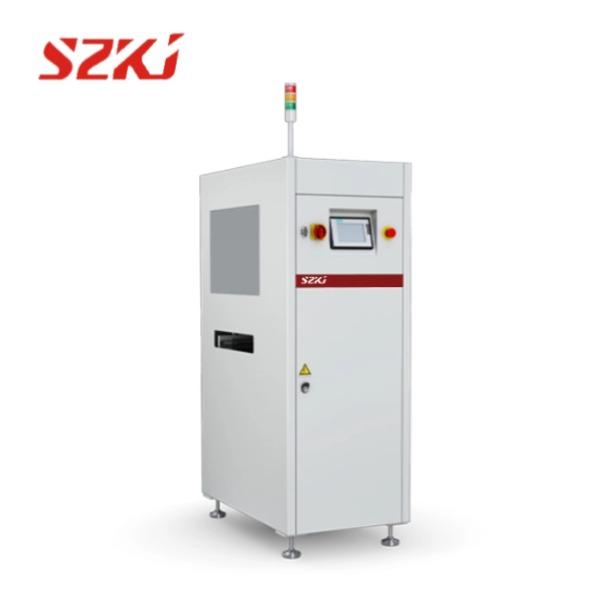
- Function: PCB flippers are used in the double-sided assembly of SMTs, as the flippers automatically flip the PCBs upside down.
- Advantage: They do not require manual flipping and minimize the possibility of contamination and inconsistent positioning of boards.
- Scenario: Essential for SMT lines with double-sided placement or multiple reflow processes.

5. Inspection Peripheral Equipment
- SPI: It can be employed to inspect the thickness, volume, and shape of the solder paste printed.
- AOI: Identifies any defects in component mounting and soldering, like the absence of components, component misalignment, or solder bridges.
- Value: The cost of rework and scraps is lowered because of the early identification of defects.
6. PCB Cleaning Machine
- Function: The primary function of the PCB cleaning machines is to remove flux residues on the surface of the board resulting from reflow soldering processes.
- Advantage: They enhance the reliability of electricity, durability, and general looks.
- Application: The application range includes industries that have a great need for reliable products, for example, the automobile, healthcare, and industrial electronics, among others.
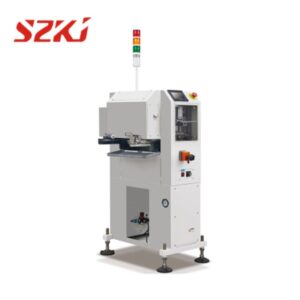
7. Marking & Traceability Equipment
- Function: In these systems, the PCBs are labeled with QR codes, barcodes, or their serial numbers with the use of laser or inkjet technology.
- Advantage: Allows complete product traceability from production through after-sales service.
- Trend: Increasingly integrated with MES systems in the context of smart factories and Industry 4.0.
Why Is SMT Peripheral Equipment So Important to an SMT Line?
- Automation: The integration of the SMT peripheral equipment devices can ensure a smooth transfer, loading, and flipping process, thereby ensuring a stable, continuous process of the SMT line with minimal handling of the PCBs.
- Efficiency: Well-matched peripheral equipment improves process connection, reduces waiting time between machines, and increases overall production efficiency. This helps eliminate bottlenecks and ensures smoother coordination across the entire SMT line.
- Quality: By minimizing human intervention, SMT peripheral equipment helps reduce handling errors and improve product consistency and yield. Stable and controlled peripheral processes also support more reliable inspection and quality control results.
- Scalability: A reasonable peripheral equipment layout allows SMT lines to adapt more easily to future capacity expansion and process upgrades. This flexibility makes it easier to add new machines or integrate smart manufacturing systems without major line restructuring.
Conclusion
In summary, a truly efficient, stable, and scalable SMT production line depends on a well-designed SMT peripheral equipment system. Although these machines do not directly perform placement or soldering, they play an essential role in PCB conveying, buffering, flipping, inspection, and cleaning. As a professional manufacturer and solution provider of SMT peripheral equipment, SZKJ is committed to delivering reliable, highly compatible equipment that helps customers achieve efficient and flexible SMT production across different application scenarios.
When planning or upgrading an SMT line, manufacturers should carefully evaluate their product types, capacity goals, and future development plans to select the right SMT peripheral equipment. For more information or professional configuration advice, please feel free to contact SZKJ—our team is ready to support your SMT production needs.