In electronics assembly, productivity and precision are key. One very important piece of equipment that helps ensure smooth production is the Wave Solder Unloader. The unloader plays a critical role in the post-soldering process by being responsible for the safe transfer of PCBs from the wave solder machine to the next assembly process. Without a reliable unloader, even minor failures can lead to bottlenecks, product damage, or costly downtime.
A Wave Solder Unloader not only improves line automation but also ensures that each PCB exits the soldering process smoothly and safely. In this article, we’ll discuss what a wave solder unloader is, explore its role in SMT and DIP production, and explain why such equipment is indispensable in modern PCB assembly.

I. Understanding SMT Auxiliary Equipment
(1)Role of Auxiliary Equipment in SMT Lines
Auxiliary equipment in any SMT or DIP assembly line is as important as the production equipment. They maintain continuous flow, reduce human intervention, and maintain consistency in quality. Some other well-known SMT auxiliary devices, besides the Wave Solder Unloader, are:
- Loader and unloader – Automates the loading and unloading of PCBs into the production line, improving efficiency and reducing manual handling.
- Conveyor system – Continuously transports PCBs from one stage to the next, maintaining a smooth and stable workflow.
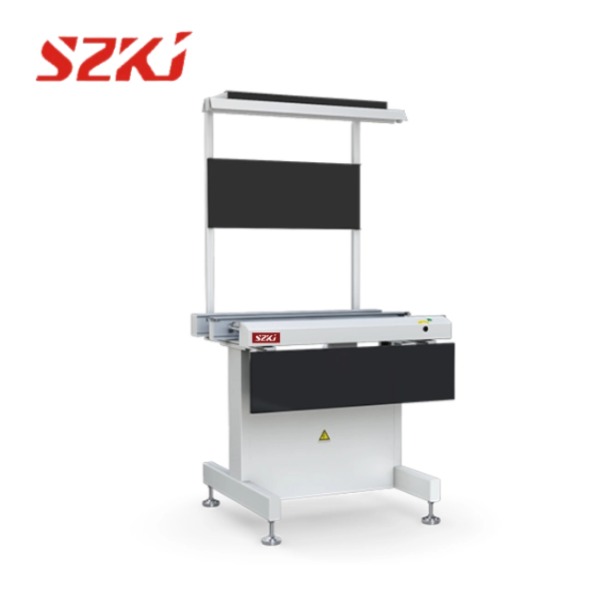
- PCB inspection conveyor – Allows operators to visually inspect board quality and easily remove any defective units.
- NG/OK PCB unloader – Separates good and defective boards immediately after soldering or inspection, ensuring only qualified boards move forward in production.
These machines are the lifeline of a continuous SMT process. Together with automated soldering machines, they keep production efficient, safe, and precise.
(2)Why Wave Solder Unloader Needed
One of these supporting equipment, the Wave Solder Unloader, serves a unique purpose. PCBs, once soldered, must be transported carefully to the next operation—often cleaning, inspection, or testing. The unloader maintains the soldered boards in a flat and stable position, preventing warping or vibration that could stress sensitive components or joints. To summarize it in short, it serves as an interface between the solder process and end assembly, adding consistency and minimizing handling by hand.
II. SZKJ Wave Solder Unloader Solutions
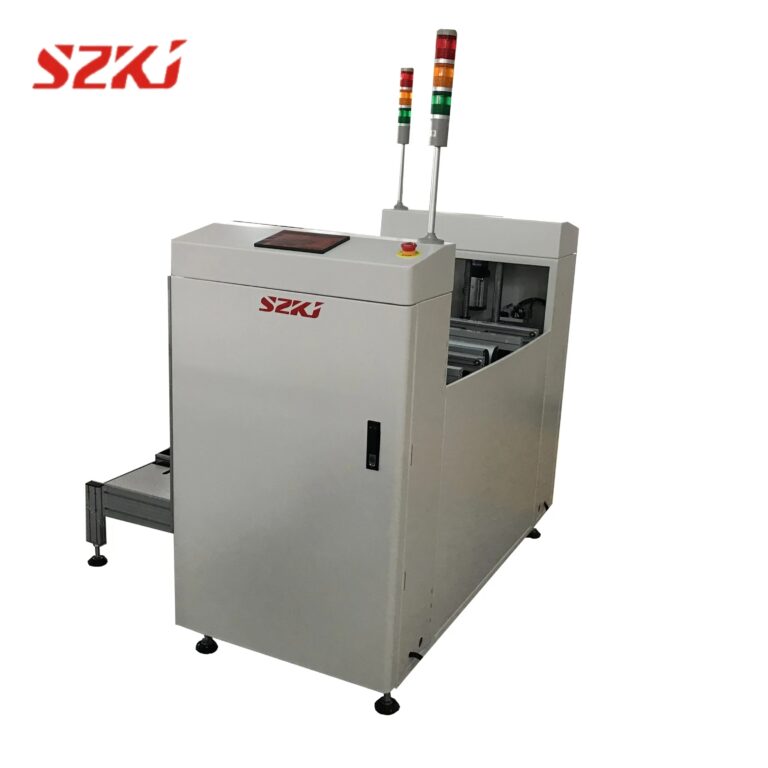
DIP-350-SZ Wave Solder Unloader With Rail Belt Unloader Wave Exit Conveyor for PCB is a sample of a new and robust design built for high-precision assembly lines. It offers flawless integration between the soldering process and the inspection or testing processes that follow.

(1)Main Characteristics
- Mitsubishi PLC Program Control: Ensures precise timing and faultless synchronization with the wave soldering system.
- Continuous Queuing Unload Function: Unloads PCBs from the solder machine continuously without interrupting production.
- Manual Crank Width Adjustment: Offers quick and accurate width adjustments for different-sized boards.
- Adjustable PCB Conveying Angle: Offers more flexibility for downstream processes or different layouts.
- Reinforced Base Design: Offers anti-shifting and enhances operating stability.
- ESD Flat Belt Transmission: Protects boards from static discharge.
- Customizable PCB Flow Direction: Can be adjusted to accommodate different factory line setups.
- SMEMA Compatibility: Allows interface with other SMT machines for total line automation.
(2)Advantages to Manufacturers
SZKJ’s DIP-350-SZ Wave Solder Unloader allows manufacturers to achieve higher efficiency and lower maintenance costs. It minimizes handling by hand, decreases potential damage to components, and increases consistency in production.
As the unloader made by SZKJ is automatic, it eliminates downtime between processes—presenting each soldered PCB to the subsequent process at the right speed and alignment.
III. Benefits of Having a Wave Solder Unloader
- Improved Efficiency
Automation saves time. A line can increase its throughput by as much as 20–30% with the addition of a Wave Solder Unloader, as it reduces manual handling and line stoppages.
- Improved Product Quality
The unloader prevents scratches, warping, and solder defects that occur when PCBs are not handled properly. The gentle transition leaves every board in pristine condition after soldering.
- Reduced Labor Costs
Manual unloading not only requires additional operators but also opens the door to human error. Automating the process allows a factory to move workers to higher-value-added activities without a loss of production.
- Consistency and Reliability
Since the Wave Solder Unloader is under programmable control, each board is processed in the same state.
Repeatability is guaranteed, and less fault occurs.
IV. Choosing the Suitable Wave Solder Unloader
When selecting a Wave Solder Unloader, consider the following important factors:
- Compatibility: Ensure that the unloader is compatible with your wave soldering system.
- Belt Type: ESD-safe belts play a significant role in protecting sensitive components.
- Width Adjustment Range: Must be able to accept all the PCB widths in your production run.
- Speed Control: Variable speed synchronisation with other conveyor sections.
- Build Quality: Sturdy construction reduces vibration and extends equipment life.
V. Integration with SMT Systems
Wave Solder Unloader is designed to work together with SMT and DIP lines. When combined with loaders, conveyors, inspection modules, and buffers, the producers have a smart, fully automatic assembly line. It provides continuity in product transition from soldering to packaging with less human intervention and efficient operations.
Conclusion
A Wave Solder Unloader is not just an accessory but a practical automation tool that ensures the trouble-free functioning of the PCB assembly line as a whole. From improved safety of operations to product consistency, its benefits are evident.
SZKJ, as an experienced manufacturer of PCB handling equipment, provides integrated solutions that support both SMT and DIP production lines.
Its equipment is designed with a focus on reliability, stability, and smooth operation, helping factories achieve seamless transitions between processes and minimize downtime. Through continuous innovation and quality assurance, SZKJ has earned recognition as a trusted partner in the field of intelligent PCB assembly systems.