Different conveyor belt types are designed for various loads, speeds, and operating conditions, each requiring specific maintenance practices. Whether transporting lightweight components with a flat belt or heavy items with a steel belt, understanding the characteristics of your conveyor belt type helps prevent operational problems and extend equipment lifespan. This article discusses five common conveyor belt problems, their causes, and practical troubleshooting methods suitable for different conveyor belt types.
Misaligned Conveyor Belt and Repairing the Issue
(1)Common Causes of Misalignment
Failure of the belt’s movement on the rollers or an improperly aligned conveyor belt type may typically be attributed to almost every type of conveyor belt. Misaligned belts result if the conveyor moves or shifts the belts toward one side of the conveyor. This can result due to the following causesIncorrect alignment of guide rails and uneven mounting of the type of conveyor belts
- Tension inequality across the width of the belt
- Deteriorated or improperly mounted pulleys/rollers
- Expansion or contraction due to the temperature/humidity of the material of the belt
(2)Troubleshooting
To align the belts on different types of conveyor belts:
- Verify the guide rollers are parallel with the center line of the belts.
- Measuring the belt tension and adjusting the tensions evenly across the width.
- Replacement of worn rollers and pulleys keeps the system running smoothly.
- Remove the debris surrounding the belts that may obstruct the belts and cause more misalignment.
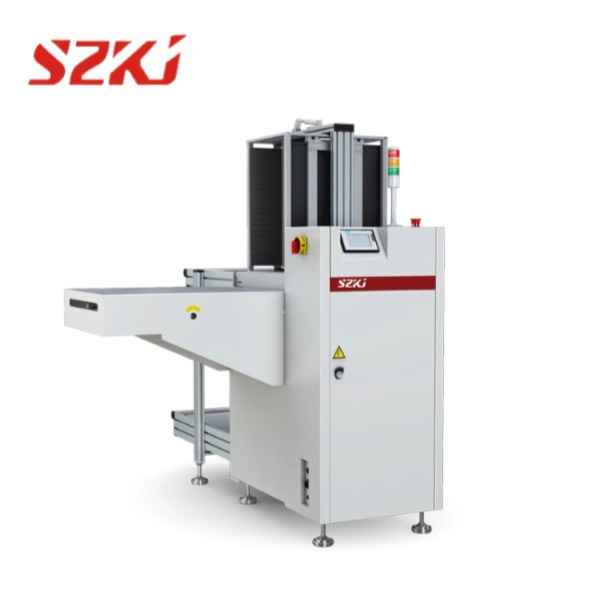
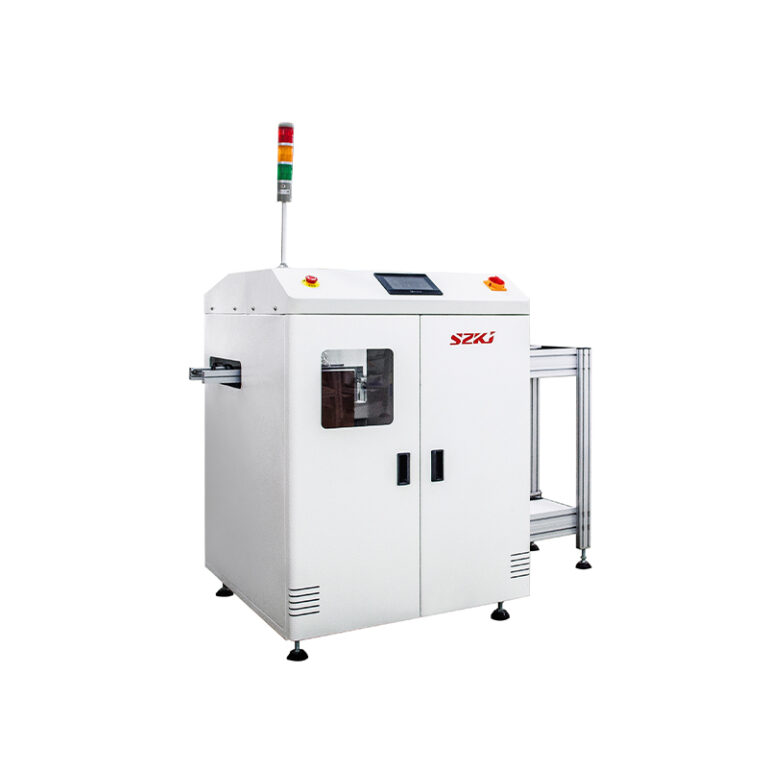
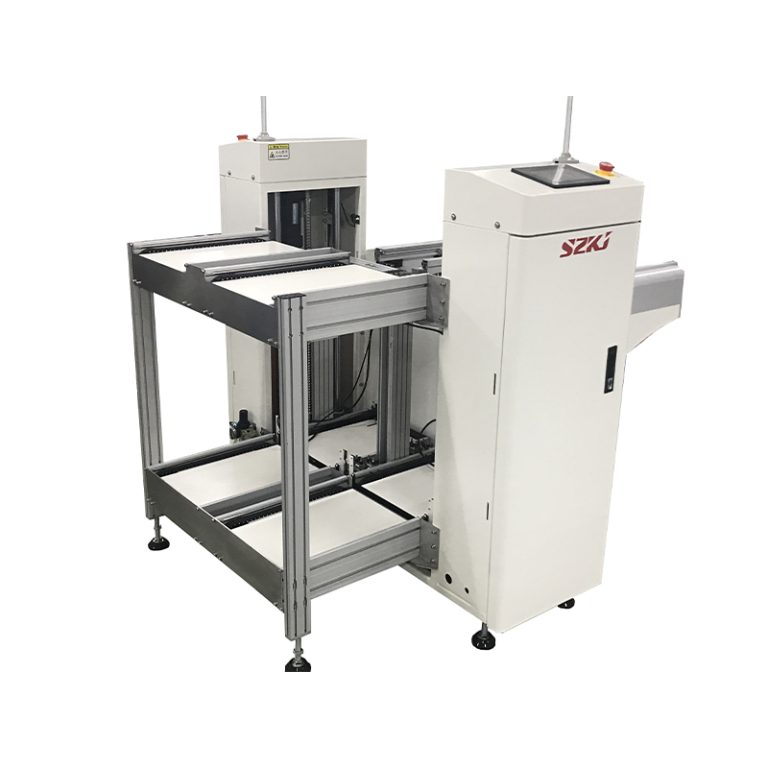
SZKJ’s NC-BC-330 SMT Conveyor Belt provides the highest form of guide rails with adjustable width screws and optical sensors that enable easy detection of alignment issues utilizing the belts’ optical sensors. This allows the Operators to precisely align their guide edges and screws and effectively explain how knowledge of their type of conveyor belts makes troubleshooting relatively easy.

Conveyor Belt Tear or Breakage
(1)Causes of Breakage
Tear or breaking failures may appear in any conveyor belt type, particularly during the movement of sharp or highly loaded materials. Such failures are often linked to factors like:
- Materials that exceed the designed capacity of the type of conveyor belt
- Aged or worn-out material of the
- Frayed edges on the belt.
(2)Troubleshooting and Prevention
To avoid or repair tear issues with your type of conveyor belts:
- Ensure that the material being transported does not exceed the capacity of the belt.
- Always inspect the belt for signs of wear or deterioration.
- To avoid direct contact of the sharp material with the gear edge.
- Abrasion and composite materials may be used for heavier conveyor belts.
Motor or Drive System Problems
(1)Symptoms of Motor Failure
All varieties of conveyor belts have their motor and driving system. Motor problems usually appear as:
- Slower belt movement or intermittent stops
- Abrasion noises/Operating too InterruptedException
- Lack of power to move materials on the conveyor belt type
(2)Troubleshooting and Prevention
These are the procedures used when dealing with mechanical issues on any type of conveyor belt:
- Ensure that the power supply meets the requirements of the motor.
- Inspect the drive belts or chains for slackness, wear, or slippage.
- Perform routine maintenance on motors that may include cleaning and part replacement.
You could consider the application of motor monitoring sensors for the early detection of issues with your conveyor belt type on your automated production line.
Material jamming issues
(1)Causes of Material Jamming
Across every conveyor belt type, material jamming can also arise and slow down operation due to various contributing factors:
- Products that exceed the width of the buckle or have irregular shapes
- Incorrect type of conveyor belt based on material handled
- Insufficient smoothness on the surface of the belts.
(2)Troubleshooting and Prevention
To avoid jamming on your conveyor belt type:
- Choose the type of material based on the material characteristics; that could be a flat type or a mesh type of belts.
- Adjust the rate of the belts so that the materials flow smoothly.
- Check the performance of the sensor and optical switch regularly.
- Install guide plates or slow the belts if the material exhibits a higher jamming factor.
Noise and Vibration Problems
(1)Sources of Noise and Vibration
When a conveyor belt type begins producing unusual noise or vibration, it often signals that certain internal mechanical parts require inspection.
- Misaligned pulleys and rollers
- ncorrect pulley/roller rotation
- Worn or under-lubricated roller bearings
- Irregular Belt Tensions
- Either unstable guide rails/machine frame
(2)Troubleshooting
To reduce noise and vibration on a conveyor belt type of machine the following method may be employed:
- The roller bearings must be checked periodically and worn-out parts replaced.
- Adjust the belt tensions evenly across its width.
- Make the machine frame stiffer or install vibration dampers.
To stabilize the belts during higher frequency vibrations, the option of using an anti-vibration pad or special bolts could be considered.
Choosing the Right Conveyor Belt Type
Selecting the correct conveyor belt type is crucial for production efficiency and equipment longevity. Common options include:
- Flat belts: Suitable for lightweight to medium-weight materials
- Round belts: Ideal for small components or PCB transport
- Mesh belts: Used for high-temperature or ventilated environments
- Heavy-duty steel belts: Designed for extremely heavy or high-impact materials
The NC-BC-330 SMT conveyor belt is a flat belt type with anti-static properties, high-precision guide rails, and smooth width adjustment. This makes it ideal for transporting PCBs and small electronic components safely and efficiently
Importance of Regular Maintenance
Regardless of the conveyor belt type used, regular maintenance is key to preventing failures:
- Inspect belt wear and tension
- Remove dust and debris from the belt and surrounding equipment
- Lubricate bearings and guide rails
- Test sensors and switches for proper function
- Implementing a maintenance schedule for your conveyor belt reduces downtime, extends belt life, and improves overall production efficiency.
Conclusion
Understanding the right conveyor belt type and its operation helps maximize equipment lifespan and minimize downtime. Using high-quality conveyor belt types like SZKJ and well-designed equipment ensures our systems operate at optimal speed and maximum efficiency.