In modern electronics manufacturing, automation and efficiency are critical for maintaining high production quality. An SMT receiving machine is an essential piece of equipment in an SMT production line, responsible for automatically receiving, stacking, and buffering printed circuit boards (PCBs) after processes such as solder paste inspection, component placement, or reflow soldering. By adopting the SMT receiving machine, production companies can significantly reduce human involvement, improve the consistency of production, and maintain a smooth production flow. Knowledge about the significance, functioning, categories, and applications of the SMT receiving machine is thus required for improving SMT production.
Role of an SMT Receiving Machine
- Enhancing Automation and Efficiency
An SMT receiving machine reduces the need for human involvement in handling the PCBs towards the end of the production process. For high-volume production, this ensures a steady flow of PCBs, thereby preventing a bottleneck created through manual handling.
- Ensuring PCB Safety and Quality
The smt receiving machine is designed to handle PCBs gently, avoiding collisions, scratches, or electrostatic damage. By maintaining the integrity of each board, the smt receiving machine helps improve product yield and quality.
- Maintaining Production Line Stability
By acting as a buffer, the SMT receiving machine ensures that the production line moves at slightly different speeds in both directions. This plays a very important role in helping to maintain efficient production.
Working of an SMT Receiving Machine
- Signal Communication and Board Detection
An smt receiving machine typically communicates with upstream equipment through standard SMEMA signals. When a PCB arrives at the receiving station, sensors detect its position and trigger the receiving mechanism.
- Magazine/Feeder Handling
SMT receiving machines often use magazines or feeders to store PCBs temporarily. Boards can be loaded manually or automatically, with adjustable capacity to suit different production needs.
- Control System and HMI Interface
Most of the SMT receiving machines are provided with PLC control and HMI. Operators can set the width of boards, push plate speed, and modes of storage. Operators can monitor operation status through real-time status displays and get notifications for anomalies.
Types of SMT Receiving Machines
(1) Magazine-Type SMT Receiving Machine
Magazine-type SMT receiving machines use magazines to store PCBs in an organized and structured manner. This type is widely applied in high-volume production lines, where orderly storage and batch handling are required.
The UL-250-SZ multifunctional board receiving machine of SZKJ is a typical example of a magazine-type SMT receiving machine. The machine employs a cylinder-operated push plate with a magazine, which provides fast and stable PCB reception, PLC control with color HMI.

Key Features
- Integrated solid structure lifting platform design.
- Supports SMEMA signal communication for seamless line integration.
- The special sheet metal structure provides a better understanding of the ammunition depot’s operational status.
(2) Conveyor-Type SMT Receiving Machine
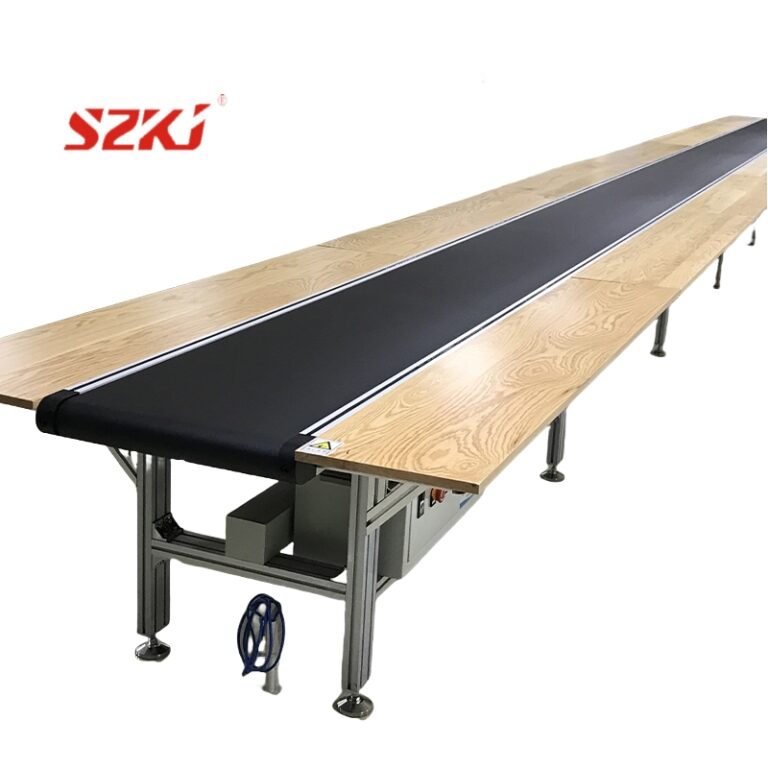
The conveyor-type SMT receiving machine uses belts or rollers that move PCBs from the receiver to the next workstation or to an area for manual collection. It is ideal for lines with uninterrupted flow.
Key Features
- Simple Structure: Mechanically simple, easy to maintain.
- Continuous Transport: Suited for production lines that are relatively stable, requiring less buffering.
- Fast Response: Boards are transferred immediately.
- Space Efficient: Suitable for lines with limited space.
(3) Buffer-type SMT Receiving Machine
Buffer-type SMT receiving machines temporarily store PCBs to compensate for speed differences between upstream and downstream machines. Such a type facilitates smooth manufacturing in complex high-mix production environments.
Key Features
- Strong Buffering: Deals with differences in production line speeds.
- Increased Line Stability: Reduces idle time due to machine pauses.
- Adaptable to Complex Lines: Suitable for SMT lines with multiple machines or processes.
- Flexible Configuration: Storage capacity and type may be configured according to individual needs.
Applications of SMT Receiving Machines
- Consumer Electronics Manufacturing
In smartphones, tablets, and wearable technology, SMT receiving machines are utilized in managing high-speed、high-volume PCB manufacturing processes concerning effective receipting and storage without compromising product quality.
- Automotive Electronics
Automotive electronic boards demand high reliability. An smt receiving machine reduces human error in board handling, maintains consistent production, and minimizes defects.
- Medical and High-Reliability Electronics
In medical device production, SMT receiving machines play an important role in preserving the integrity of PCBs through effective receiving and organized storage, thereby preventing potential impairment and ensuring that quality requirements are strictly adhered to.
Common Questions About SMT Receiving Machines
Q1: Does the SMT receiving machine need a material box?
A1: Not necessarily. The choice between a magazine, conveyor, or buffer type depends on production line layout, PCB dimensions, and downstream process requirements.
Q2: How does an SMT receiving machine integrate with existing equipment?
A2: Most SMT receiving machines have the capability to handle standard SMEMA signals. This ensures that communication with pick-and-place machines, reflow ovens, and inspection systems is seamless.
Q3:Can SMT receiving machines handle different PCB sizes?
A3: Yes. Adjustable width and storage configurations allow SMT receiving machines to be adapted to various PCB sizes. They can thus be used in highly mixed production environments.
Conclusion
An SMT receiving machine is more than just a PCB handling system; it is a vital element that facilitates smooth, safe, and efficient operation of the overall SMT manufacturing process. Effective selection and integration of the SMT receiving machine will be extremely helpful in reducing labor costs, improving consistency, and ensuring PCB quality.
SZKJ specializes in designing high-efficiency SMT conveyor solutions, integrating SMT receiving machines with wave soldering and pick-and-place equipment seamlessly. With SZKJ solutions, your SMT production line operates like a well-coordinated machine, ensuring continuous, safe, and high-quality manufacturing.

-768x768.jpg)