In the world of electronics, one of the most commonly encountered terms is VCC voltage. Whether you’re a beginner learning circuit design or an experienced engineer working on embedded systems, understanding VCC and its role is essential for proper circuit functionality. This article will explore what VCC voltage is, how it works, and its importance in electronic applications.
What is VCC Voltage?
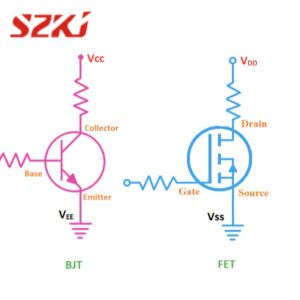
VCC stands for “Voltage at the Collector” and originated from bipolar junction transistor (BJT) terminology. In modern electronics, VCC voltage is used more generally to refer to the supply voltage provided to the active components of a circuit, particularly integrated circuits (ICs). In most digital circuits, VCC represents the positive voltage supply, typically +3.3V, +5V, or +12V, depending on the requirements of the components used.
It’s important to distinguish between different voltage notations. While VCC is used for positive voltage (usually for NPN BJTs and CMOS ICs), other similar terms include:
- VEE– usually refers to the negative voltage supply
- VDD– refers to the drain voltage in MOSFET-based systems
- VSS– indicates ground or zero volts
Understanding these notations helps avoid confusion and ensures the correct design of circuits.
Why VCC Voltage Matters
The VCC voltage is the primary power source for logic and analog components within a circuit. If it is too high, it can damage components; if it’s too low, the circuit may not function correctly. Therefore, ensuring a stable and accurate VCC voltage is critical to system performance and safety.
For example, a typical microcontroller might require a 3.3V or 5V VCC. Supplying the wrong voltage can cause the microcontroller to malfunction or permanently fail. Voltage regulators are often used in electronic systems to provide a stable VCC voltage, converting higher or unstable voltages into consistent outputs.
Applications of VCC Voltage in Electronics
- VCC voltage is found in a wide range of electronic applications:
- Microcontrollers and Microprocessors: These devices rely on a specific VCC to operate correctly. Boards like Arduino and Raspberry Pi typically run on 3.3V or 5V.
- Sensor Modules: Most sensor modules require a defined VCC voltage for activation and signal transmission.
- Digital Logic Circuits: From simple NAND gates to complex flip-flops, all require a steady VCC supply.
- Communication Modules: Wireless modules like Wi-Fi, Bluetooth, or Zigbee also depend on a precise VCC voltage to maintain connectivity and data integrity.
In all these applications, incorrect supply voltages can lead to signal errors, data corruption, or even hardware failure.
How to Measure and Regulate VCC Voltage
Measuring VCC voltage can be easily done using a digital multimeter. By placing the probes across the VCC and ground terminals of a circuit, you can verify whether the expected voltage is being delivered. This is a crucial step in circuit troubleshooting and diagnostics.
To regulate VCC voltage, engineers often use voltage regulators such as:
- Linear Regulators(e.g., 7805 for 5V output)
- Low Dropout Regulators (LDOs)
- Switching Regulators or Buck Converters
These components ensure that even if the input voltage fluctuates, the output remains steady and within the component’s operating range.
Best Practices for Managing VCC Voltage
To ensure long-term reliability and performance in your circuits, consider the following best practices:
- Use Decoupling Capacitors: Place capacitors near ICs to reduce voltage noise and stabilize the VCC.
- Select Quality Power Supplies: Ensure your power source can consistently deliver the required current and voltage.
- Monitor Temperature: Voltage regulators and power supplies can heat up, affecting VCC output.
- Label Your Circuits: Clearly mark VCC lines to avoid wiring mistakes during assembly or debugging.
Conclusion
Understanding and managing VCC voltage is fundamental in electronics design. It serves as the lifeline for digital and analog components, and maintaining its stability ensures that circuits perform as expected. Whether you’re designing a simple LED flasher or a complex microcontroller system, paying attention to VCC voltage can save time, protect your components, and improve overall reliability.
Always double-check your voltage requirements, use proper regulation techniques, and don’t underestimate the power of a stable VCC.