Key machines involved in an efficient and stable PCB manufacturing line range from drilling, circuit imaging, etching, inspection, to material handling of the PCB. During the development of electronic products toward miniaturization and high density. A modern PCB production line should guarantee high precision in processing while upgrading its automation to meet mass production. Each step plays a determining role in guaranteeing quality and reliability for the finished product.
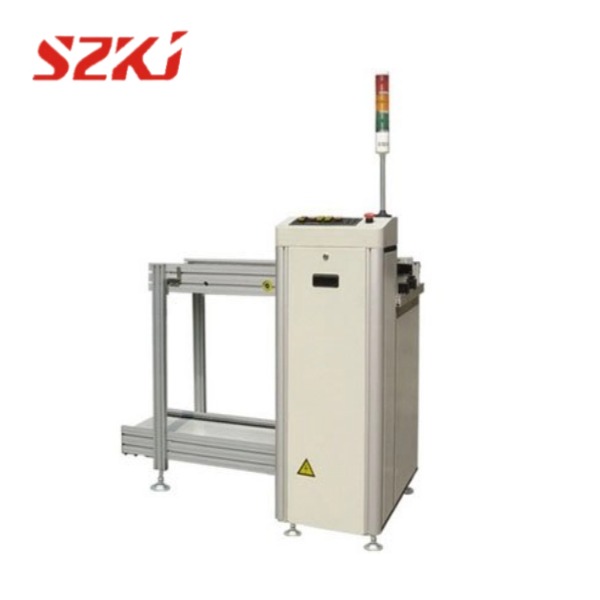
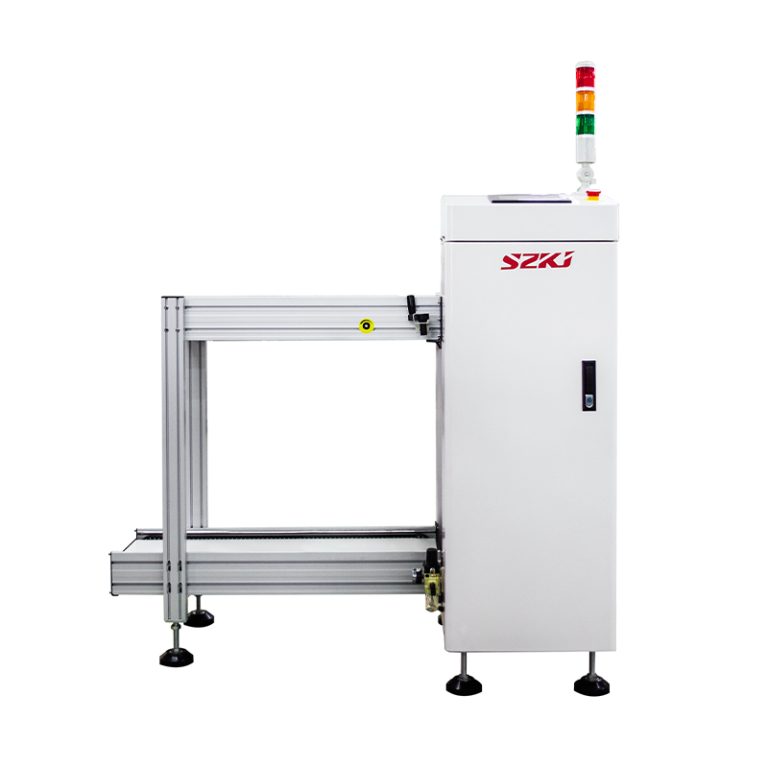
1. PCB Loader / Unloader
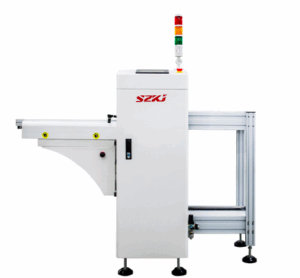
The main automation devices in a PCB production line include a PCB Loader/Unloader, which loads boards into the line and collects finished PCBs. The loader can automatically separate stacked PCBs and feed them into the line in a controlled sequence. The unloader will organize the completed PCBs to avoid bending or damage.
The automation in the Loader/Unloader minimizes manual intervention to allow for long-term continuous operation with efficiency and a minimum amount of labor on the production line. This will not only meet the goal of improving efficiency but also reduce risks of PCB scratches, warping, and static damage-it is indispensable for every PCB manufacturing line.
Advantages include:
- Automated loading and unloading, reducing manual handling
- Minimizes PCB damage and contamination risks
- Ensures continuous and stable production
- Key component for unmanned production lines
2. CNC Drilling Machine
CNC drilling machines are among the most precision-critical machines in the manufacture of PCBs-they bear responsibility for the processing of through-holes, blind holes, and microvias. PCBs become increasingly thinner, smaller, and highly densified. The accuracy of the holes, the deviation of positions, and the wall quality determine the final performance of products.
Modern CNC drilling machines feature high-speed spindles, automatic tool changing, and dynamic compensation. And intelligent path planning, ensuring both high precision and high throughput. Their drilling capability directly affects subsequent plating quality and is essential for multilayer and HDI PCB technologies.
3. Exposure Machine of PCB manufacturing line
Exposure machines are designed to provide high accuracy while transferring the circuit pattern onto a photosensitive dry film. They contain high-intensity UV light sources, accurate alignment systems, and uniform illumination, hence creating conditions that provide true dimensions of lines with clearly outlined edges, ideal for etching.
For high-density PCBs, exposure accuracy and stability are of great importance, and the product yield may even be influenced by a tiny error at the level of micrometers. Therefore, the quality of exposure machines directly impacts the integrity of PCB circuits.
4. Etching Machine
Etching machines remove unprotected copper layers to form the actual circuit patterns. Solution concentration, temperature, and spray pressure in the etching process have been made highly controllable by up-to-date etching machines having closed-loop control systems for uniformity and precision.
The quality of etching depends not only on the design of machines but also on a stable process environment. Most of the etching machines are fitted with filtration and circulation systems that minimize residual copper problems, which directly affect the signal integrity and electrical performance.
5. AOI Machine (Automated Optical Inspection)
AOI machines are very important in quality control for finding circuit defects such as open circuits, short circuits, and residual copper. This system scans the whole PCB with high-resolution cameras and finds possible problems using image recognition algorithms.
Compared to manual inspection, AOI offers higher accuracy and stability, thus supporting multi-stage inspection in order to verify different process stages and reduce the possibility of defects flowing to the next stage.
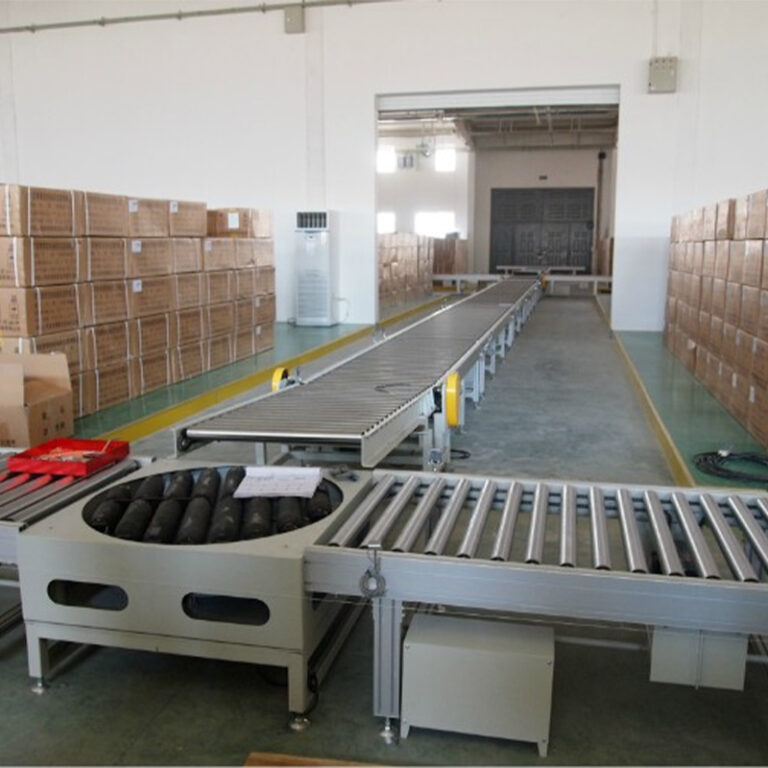
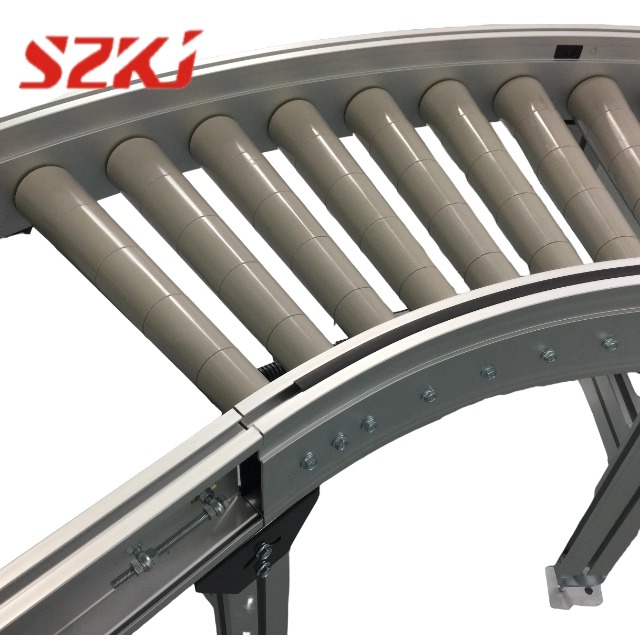
6. PCB Conveyor of PCB manufacturing line
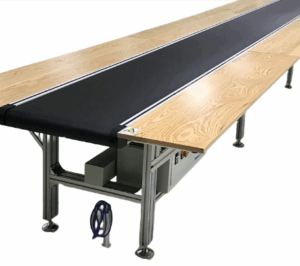
The PCB Conveyor is a key device connecting the entire production line. Responsible for the smooth transport of PCBs between different processes and ensuring continuous production. Its main features and functions include:
- Stable transport: The conveyor ensures smooth movement of the PCBs across drilling, exposure, etching, and inspection processes. With reduced PCB vibrations and possible damage, thus assuring high yield.
- Adjustable speed: The speed of the conveyor can be flexibly adjusted according to the process tempo of different processes, guaranteeing smooth operation without waiting.
- Anti-static and safety protection: The design is done with anti-static material and structure. Thus, it reduces the risk of static damage on a PCB while holding the board flat to prevent bends or scratches.
- Seamless integration and automation compatibility: PCB Conveyors can be integrated seamlessly with machinery for drilling, exposure, etching, and AOI, supporting various types and sizes that will allow the production line to respond more flexibly and with less human factor involvement.
Conclusion
An efficient PCB manufacturing line consists of multiple machines that work in coordination. Starting with Loader/Unloader machines, which manage the automation of PCB loading and collection, Conveyors for inter-process smooth transportation, and CNC drilling, exposure, etching, and AOI machines that form the core production stages. Each device has its own role, but with consistent goals: improve efficiency, reduce defects, and continue to produce high-quality PCBs. Proper configuration of these machines is key to building a professional production line.
As a leading brand in the industry, SZKJ provides complete and reliable PCB production line solutions, helping customers achieve automated and intelligent manufacturing. For more information or to request customized solutions, please contact us to connect with our professional team.