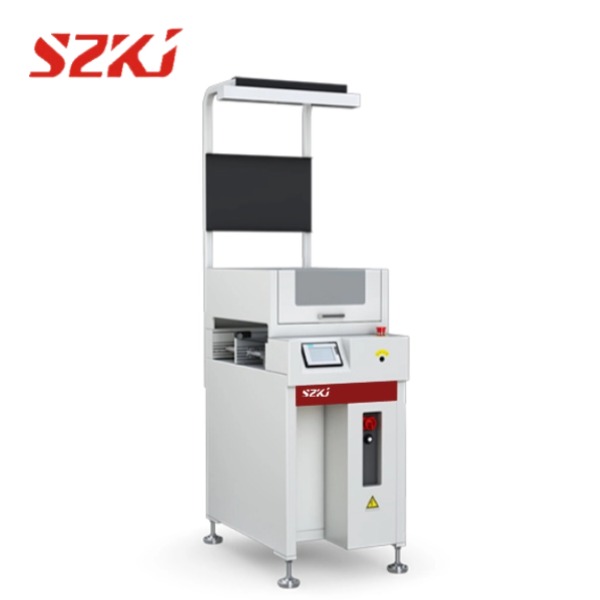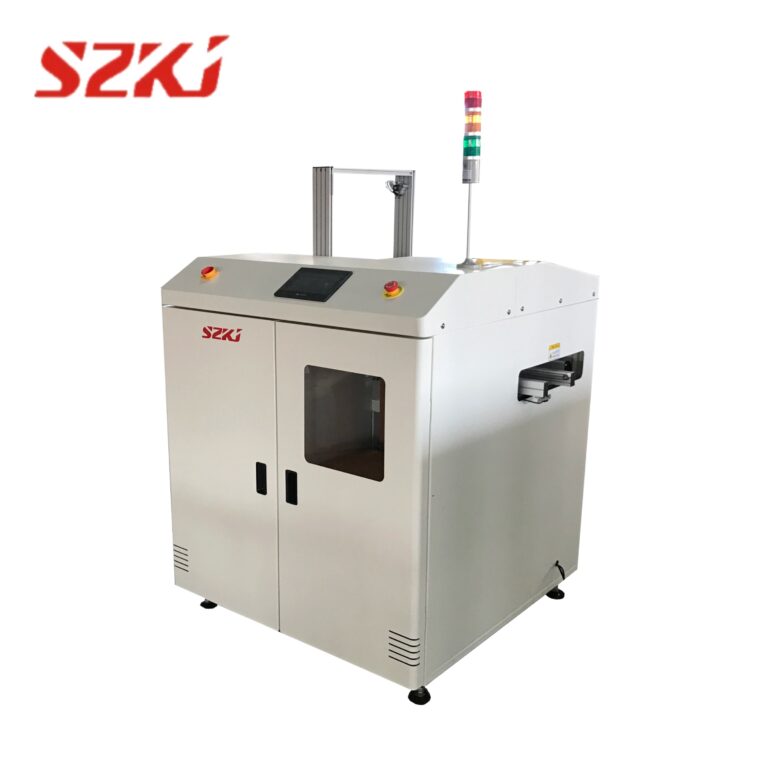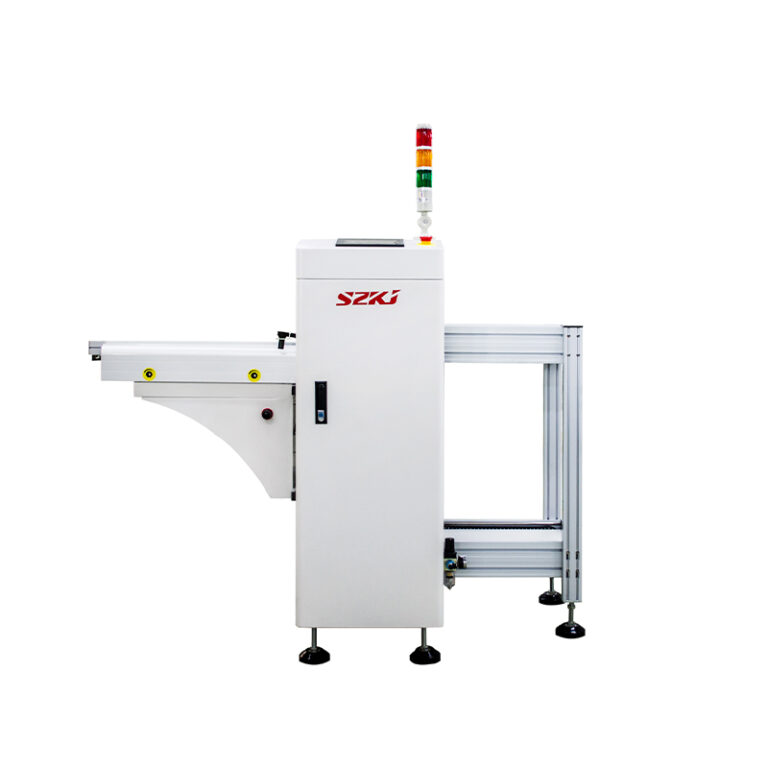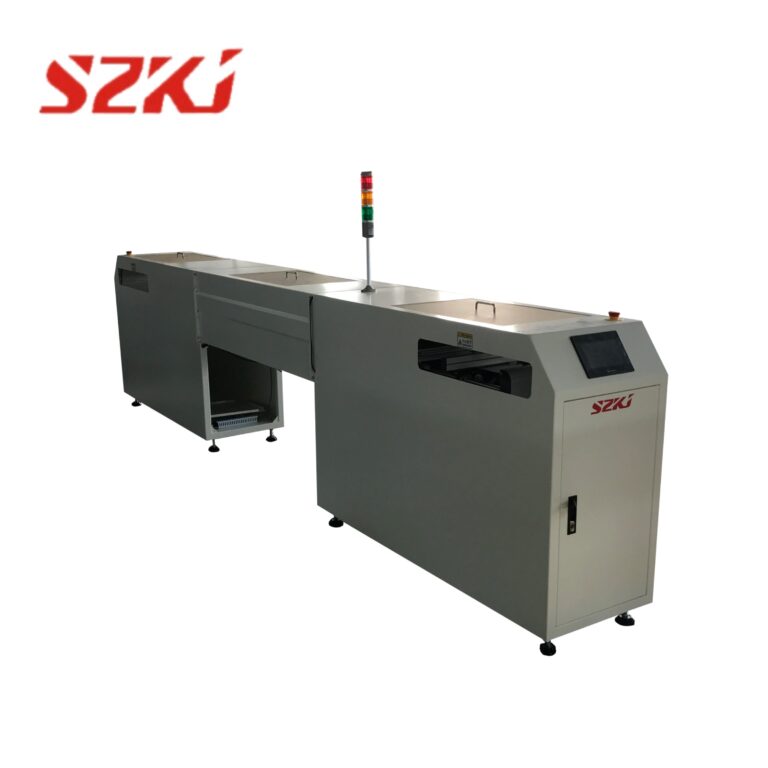
This is referred to as a wave solder exit conveyor and is mounted at the end of a wave soldering machine. After passing through the solder wave, still at high temperatures, it is received by the conveyor. This is used in PCB assembly.
In this article, the purposes of wave solder exit conveyors will be defined, their working principle will be described, and their need in a properly functioning PCB assembly flow will be clarified..
The Role of Wave Solder Exit Conveyors in the Production Line
Wave solder exit conveyors act as a transition point between soldering and post-solder processes. Their main functions include:
- Providing controlled PCB transfer speed after soldering
- Preventing board collision or stacking
- Allowing sufficient cooling before inspection or handling
- Maintaining consistent PCB spacing for downstream equipment
Without properly designed wave solder exit conveyors, boards may shift, warp, or collide, leading to solder defects or mechanical damage.
How Wave Solder Exit Conveyors Work
Wave solder exit conveyors typically use rail-based or belt-based transport systems. Once the PCB leaves the wave soldering chamber, it is transferred onto the conveyor, which moves it forward at a controlled speed.
Key operational characteristics include:
- Stable board support to avoid bending
- ESD-safe materials to protect sensitive components
- Adjustable angles to match different process needs
- Consistent motion to avoid vibration
The conveyor continues to move the PCB until it reaches a buffer area, inspection station, or unloading section.
Why Controlled PCB Exit Matters After Wave Soldering
The moment after wave soldering is critical. Solder joints are solidifying, and components are settling into place. Any sudden movement or impact can create defects such as:
- Cold solder joints
- Solder cracks
- Component misalignment
- Lifted pads or traces
Wave solder exit conveyors help minimize these risks by offering smooth, predictable PCB handling. The controlled exit process supports solder joint reliability and improves overall yield.
Common Design Features of Wave Solder Exit Conveyors
While designs vary by manufacturer and production needs, most wave solder exit conveyors share several core features.They often include:
- Adjustable conveyor width to match different PCB sizes
- Anti-static belts or rails
- Heavy, stable frames to prevent vibration
- Manual or motorized height and angle adjustment
- Compatibility with SMEMA signals for line integration
These features allow wave solder exit conveyors to be used across different PCB designs and production volumes without constant reconfiguration.
Integration With Automated PCB Handling Systems
In modern factories, wave solder exit conveyors rarely operate alone. They are integrated into fully automated lines that include loaders, wave soldering machines, inspection stations, and unloaders.
Wave solder exit conveyors support automation by:
- Maintaining PCB spacing for optical inspection
- Sending ready signals to downstream machines
- Preventing PCB backups at the wave solder exit
- Enabling continuous flow instead of batch handling
This integration helps reduce manual handling, which improves consistency and lowers labor-related risks.
ESD and Safety Considerations
Because PCBs often contain sensitive electronic components, electrostatic discharge protection is an important aspect of wave solder exit conveyors.
Typical ESD-related measures include:
- ESD-safe conveyor belts
- Grounded frames
- Controlled friction materials
- Consistent board contact points
Safety is also a concern. Exit conveyors keep operators away from hot boards immediately after soldering and reduce the need for manual intervention near high-temperature zones.
Flexibility for Different PCB Types
Not all PCBs are the same. Some are long and narrow, others are wide or irregularly shaped. Some carry heavy transformers, while others are lightweight control boards.
Wave solder exit conveyors are designed to handle this variety by offering:
- Adjustable rail widths
- Custom PCB flow directions
- Variable transfer angles
- Support for different board thicknesses
This flexibility allows manufacturers to use the same wave solder exit conveyors across multiple product lines with minimal setup changes.
For example, SZKJ‘s DIP-350-SZ Wave Solder Unloader With Rail Belt Unloader Wave Exit Conveyor for PCB combines stable rail transport with controlled unloading after soldering. Such products are designed to support continuous flow of PCBs and ensure their smooth removal from the wave soldering machine.
Long-Term Benefits of Proper Exit Conveyor Design
Well-designed wave solder exit conveyors contribute to:
- Higher solder joint reliability
- Reduced rework and scrap rates
- Smoother production flow
- Improved operator safety
- Easier line expansion or reconfiguration
Over time, these benefits translate into lower production costs and more predictable output quality.
Conclusion
Wave solder exit conveyors ensure the provision of controlled movements, mechanical stability, ESD protection, and automation compatibility that safeguard both the quality of the products and the efficiency of production. No matter if it is a small-scale production unit or a factory that produces in huge volumes, it is extremely important to understand the wave solder exit conveyor.